Electricity is essential in every modern home, powering lighting, appliances, entertainment systems, and many daily activities. However, electrical hazards can pose serious risks if electrical systems are not properly installed, maintained, or used. Understanding common electrical hazards and taking preventive measures can help protect your family, property, and valuable equipment.
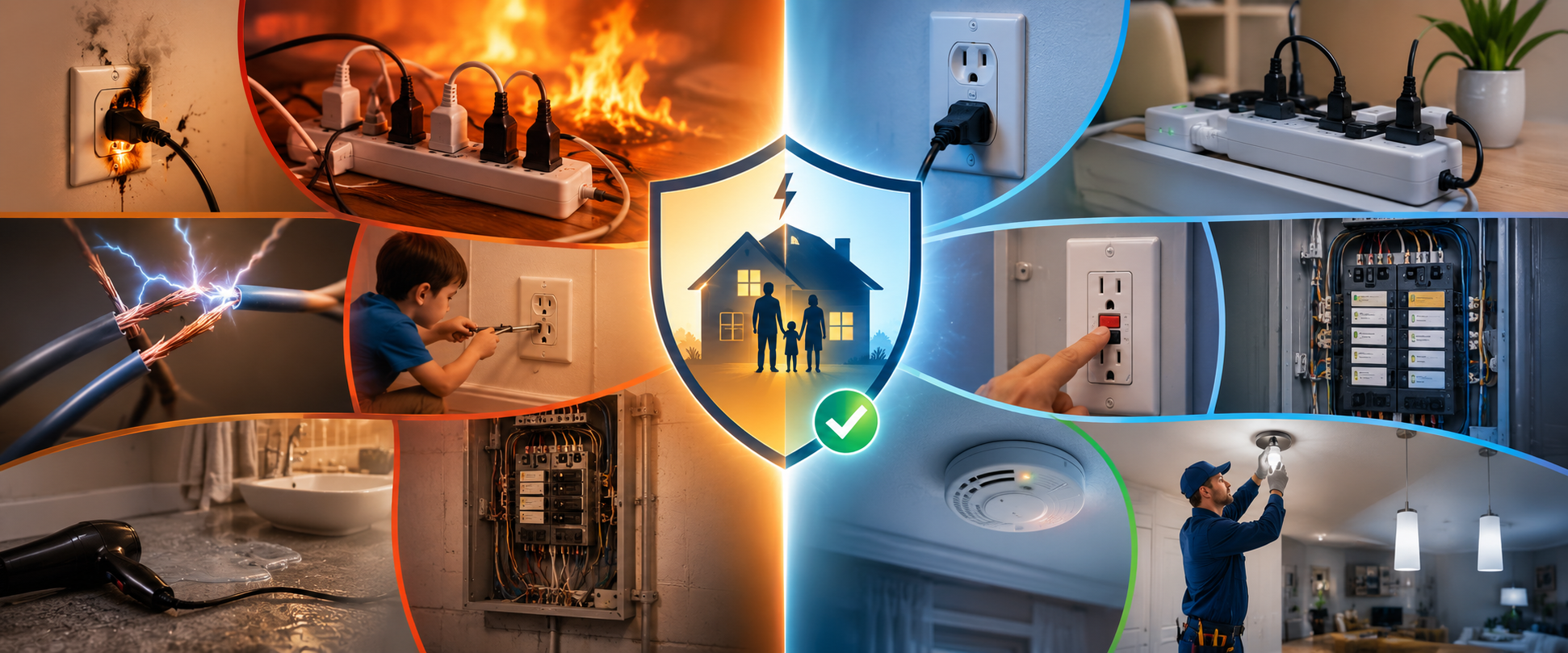
One of the most common electrical hazards is faulty or damaged wiring. Over time, wires can deteriorate due to age, wear, moisture, pests, or poor installation. Damaged wiring can cause electrical shocks, short circuits, and fires. Homeowners should regularly inspect visible wiring for signs of damage and hire qualified electricians to repair or replace faulty cables immediately.
Overloaded electrical outlets and extension cords are another frequent cause of electrical problems. Plugging too many devices into a single outlet can generate excessive heat and increase the risk of fire. To prevent overloading, distribute electrical devices across multiple outlets and use power strips with built-in surge protection where necessary.
Faulty electrical appliances can also create dangerous situations. Appliances with damaged cords, loose connections, or internal faults may cause electric shocks or sparks. Regular maintenance and prompt replacement of damaged equipment can significantly reduce these risks.
Water and electricity are a dangerous combination. Electrical outlets, switches, and appliances located near kitchens, bathrooms, or outdoor areas should be properly protected. Ground Fault Circuit Interrupters (GFCIs) should be installed in wet locations to automatically shut off power when a fault is detected.
Another common hazard is the use of outdated electrical systems that cannot handle modern power demands. Older homes may require electrical upgrades to safely support today’s appliances and technology. Professional inspections can identify potential issues before they become serious problems.
Preventing electrical hazards begins with proper installation, routine maintenance, and safe electrical practices. Homeowners should avoid DIY electrical repairs and always hire licensed electricians for installations and repairs.
By staying aware of common electrical hazards and taking preventive measures, homeowners can create a safer living environment while reducing the risk of electrical accidents, property damage, and costly repairs.